“I would never bully someone about their body - I don’t ever want other kids to feel as bad as I have about mine.”
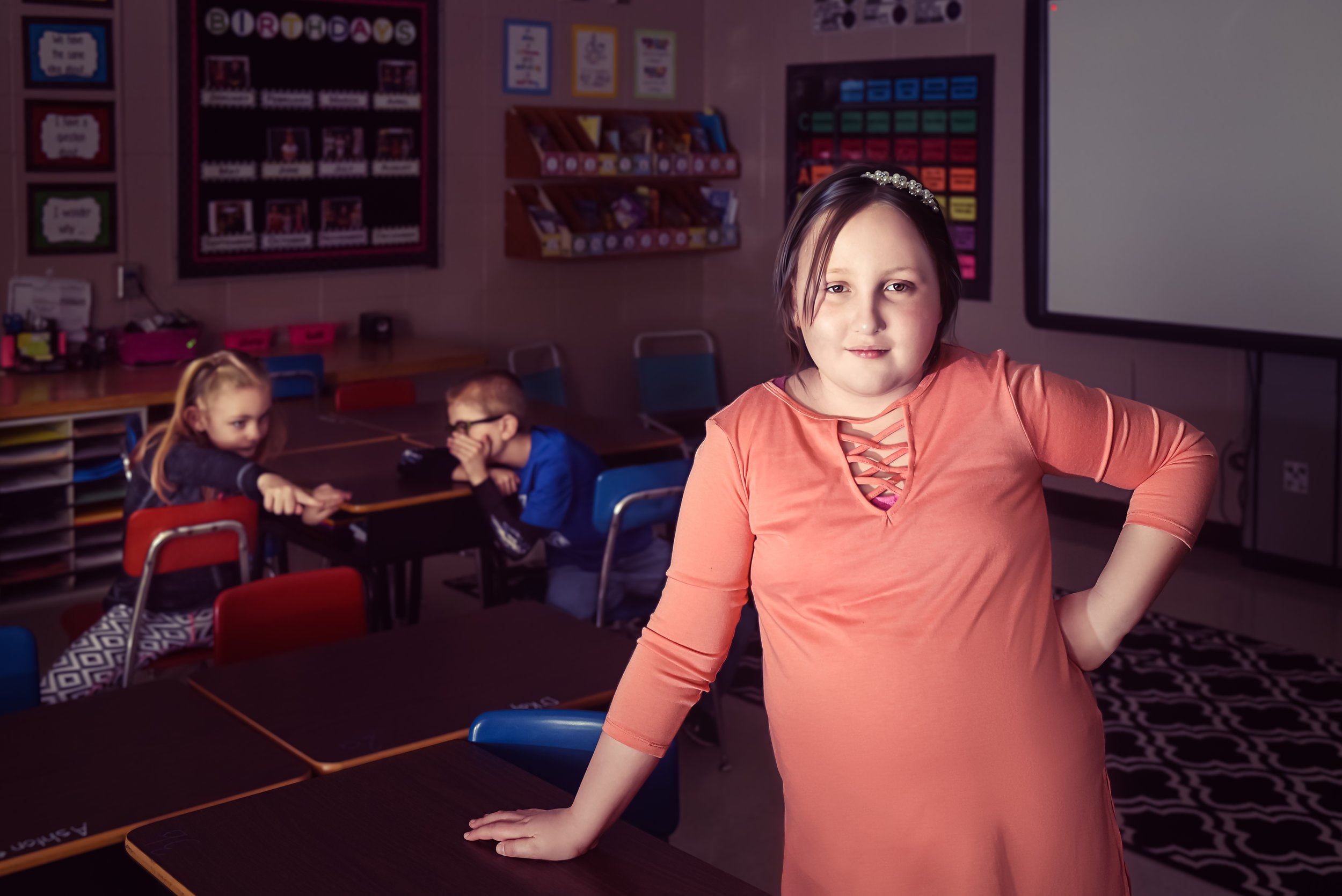
Image (above): A nine-year-old girl with short brown hair stands in her grade-school classroom. She wears a pink three-quarter sleeve shirt and a pearl barrette in her hair. Behind her, two classmates sit at their desks, leaning toward one another as they whisper and point. Natalie faces the camera and smiles, holding her posture steady amid the activity around her.

Natalie began questioning her body after being bullied about her weight in elementary school. At first, she was confused by the attention. As the comments continued, confusion turned into shame. She started to believe something was wrong with her body and became fixated on the traits her peers praised most: being skinny, pretty, and athletic. More than anything, she wanted to look like her friends instead of herself.
Weight and appearance are common targets of bullying at a young age, often shaping how children learn to see themselves long before they have the language to understand it. For Natalie, repeated teasing narrowed her view of what bodies were supposed to be and how she believed her own should look.
With support from her family, Natalie has begun working through those early messages. She is learning to stand up for herself at school and to shift her focus away from how her body looks and toward how it feels and what it can do. Small moments of self-assertion—like proudly cracking her knuckles—have become ways of reclaiming confidence on her own terms.
Natalie’s story shows how body image begins forming early, and how children can begin rewriting those narratives when they are given space, support, and voice.
Natalie, 9 - Kansas

Share Natalie’s Story
#SeeBodiesDifferently #MidwestBrokenMirror
Resources