“I want girls at a young age to learn to love themselves and not look at that broken mirror.”
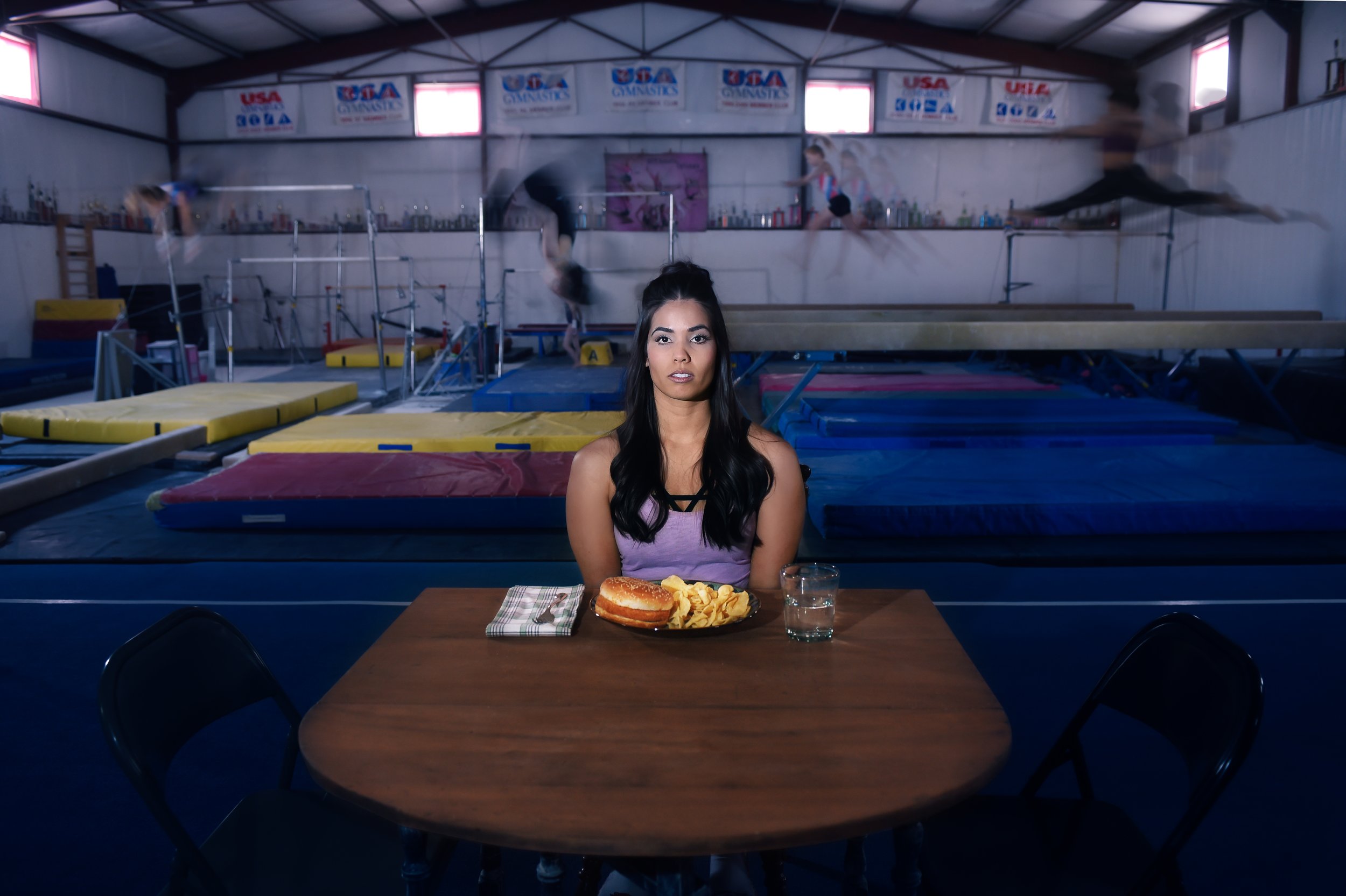
Image 1 (above): A young woman sits alone at a dining room table placed at the center of a blue springboard floor inside a gymnastics studio. She has long dark hair and wears a purple tank top. A glass of water and a plate of food sit untouched in front of her. Around her, gymnasts move quickly through the space—blurs of motion surrounding her stillness. She looks directly into the camera as the world around her rushes on.

[Image 2: The same woman sits at the table in the same gymnastics studio, now joined by her two young sons. The food on the table is being eaten. She smiles as one of her sons takes a bite of a chicken sandwich. Behind them, the gymnasts are frozen mid-movement, the space suddenly quiet—suggesting a moment of stability, presence, and a world that has slowed.]
As a competitive gymnast and cheerleader, Melissa struggled with an eating disorder for more than 15 years. Intense training at a young age changed her body, and she began to see herself as an imperfection that needed fixing. While training for hours each day, she increasingly restricted food, even as friends, family, and coaches tried to intervene. When she entered professional cheerleading, the pressure intensified and her disorder deepened.
Although her gymnastics studio promoted body positivity, Melissa couldn’t escape the broader cultural standards placed on female athletes—especially in sports that demand physical control, visibility, and perfection. The mirror she measured herself against wasn’t just personal; it was inherited.
Becoming a mother marked a turning point. Melissa knew her health had to come first—for herself and for her family. With support from her husband, she began rebuilding her relationship with her body and redefining what it meant to be a role model. Today, she speaks openly about her experience and works with Stand Up for Your Sister to support young women navigating mental health challenges.
Melissa’s story reveals how the broken mirror of perfection doesn’t disappear on its own—and what it takes to choose a different reflection.
Melissa, 31 - Kansas

Share Melissa’s Story
#SeeBodiesDifferently #MidwestBrokenMirror
Resources