“Sometimes you feel like a dehumanized object. How do you navigate your place in the world when you don’t feel comfortable in your own skin.”
Image 1 (above): A young Muslim-American woman stands on the steps of a Capitol building, surrounded by a group of protesters. She faces the camera with her arms crossed, wearing a black-and-white floral top that exposes part of her midriff. Around her, protesters hold signs that reflect common stereotypes and public controversies surrounding Muslim women. One sign depicts two lollipops, one wrapped and one unwrapped with flies, referencing purity culture. Another illustrates prescriptive expectations for wearing a hijab. A third reads, “Muslim women, let’s get naked,” evoking a white-savior narrative. Amid the visual noise and confrontation, Imaan remains composed, meeting the camera’s gaze with a quiet, self-assured expression.
**Note: The individuals portrayed as protesters are actors. The signs and imagery represent common societal narratives and do not reflect the personal beliefs of those depicted.
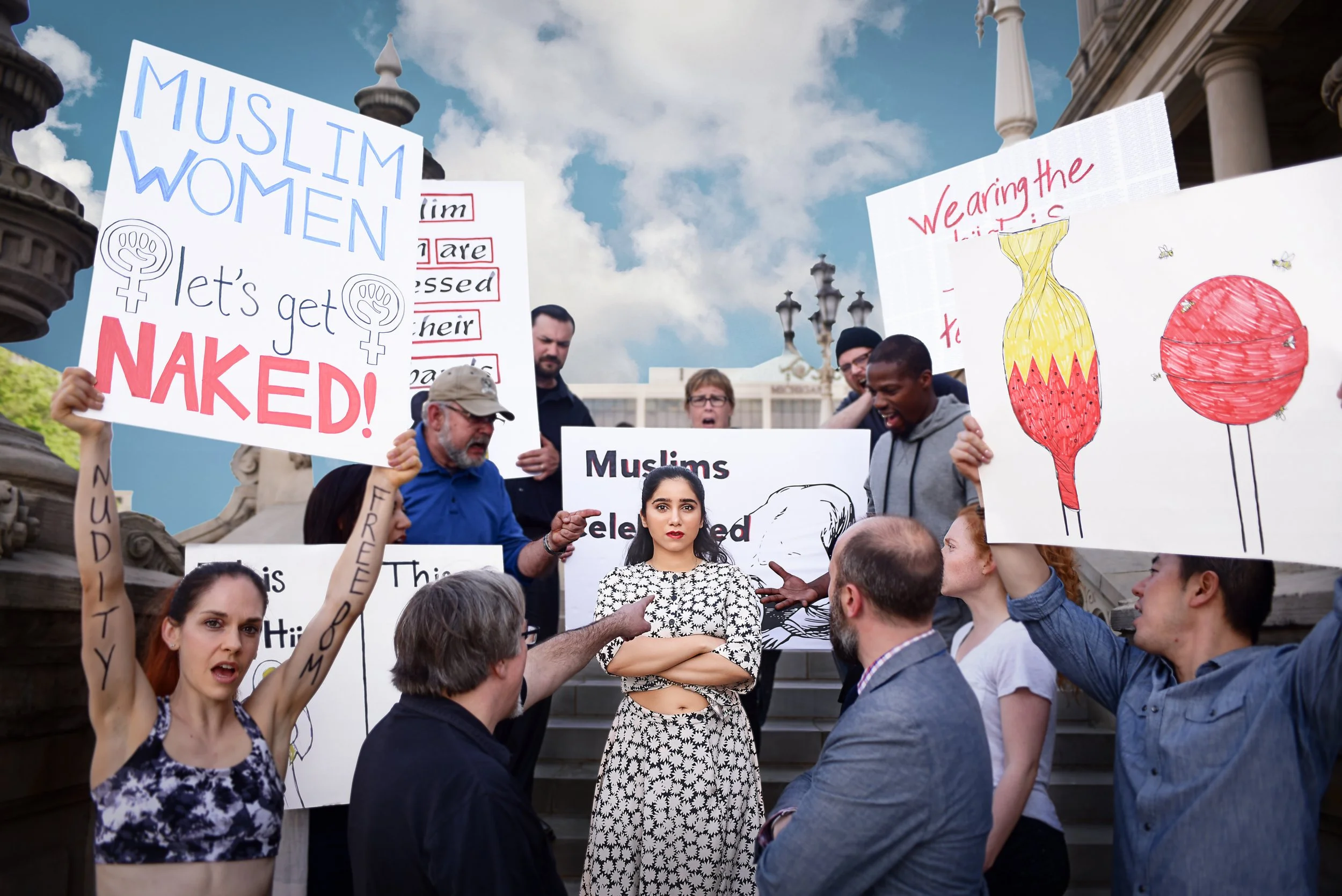
After immigrating to the United States at a young age, Imaan struggled to navigate culture shock alongside the pressures of growing up. As a Muslim-American girl, she quickly became aware of how different she looked from her peers and how closely her body and clothing were watched, questioned, and judged.
Throughout adolescence, Imaan wrestled with her cultural identity and her sense of belonging. She experienced racism and sexism both within and outside her community, often leaving her feeling unsafe and uncomfortable in her own skin. The mirror she encountered reflected not just beauty standards, but fear, misunderstanding, and expectation.
Muslim women have long been underrepresented and misrepresented in mainstream culture, frequently portrayed as passive or oppressed and criticized for how they choose to dress. These narratives erase complexity and deny agency. In response, many Muslim women are speaking out against Islamophobia and challenging stereotypes from multiple directions.
Imaan’s story reveals how body image can be shaped by visibility and power, and how redefining it can create space for other Muslim-American women and girls to be seen on their own terms.
Imaan, 27 - Michigan

Share Imaan’s Story
#SeeBodiesDifferently #MidwestBrokenMirror
Resources
- for young muslim women -